 blog
How to Understand Pool Leak Detection Cost Near You
Last Updated: November 1, 2026
Quick Summary
Pool leak detection is a diagnostic service billed separately from repair, so expect two bills: a detection fee for pressure testing, dye testing and electronic tracing, plus a written repair estimate for the confirmed leak. Ask any provider to quote the detection fee and give you a written repair estimate before work starts.
- You can rule out evaporation in about 15 minutes with a bucket test before calling anyone.
- Dye testing, pressure testing and electronic leak detection are the main methods technicians use.
- Repair cost depends on leak type, from simple fitting repairs to pipe leaks under decking.
- Ask whether the detection fee is flat-rate, which tests it includes, and if it is credited toward repair.
- Confirm in-house repair capability before booking so you avoid a second company and a second trip fee.
Table of Contents
- What Pool Leak Detection Cost Near Me Really Covers
- How to Check for a Pool Leak Before You Call Anyone
- Pool Leak Detection Methods and the Pool Leak Detection Test Pros Use
- Pool Leak Repair Cost: What Happens After the Diagnosis
- What Happens During an Appointment and How to Compare Local Providers
- Book a Leak Inspection With PoolRepairs
- Frequently Asked Questions
What Pool Leak Detection Cost Near Me Really Covers
Pool leak detection cost near me searches usually come from a homeowner watching the water line drop and wondering what the diagnosis will set them back. Here is the honest answer: leak detection is a diagnostic service, and repair is a separate job with its own price. Ask any provider to quote the detection fee and give you a written estimate for any repair before work starts.
Most homeowners expect one bill. They get two, and that surprises people.
Detection Fee vs. Repair Cost: Two Separate Bills
The detection fee pays for finding the leak. The repair cost pays for fixing it. Diagnosis typically involves pressure testing the plumbing, dye testing the shell, and tracing the water loss to a specific fitting or crack.
Repair pricing depends on what the diagnosis turns up. Ask for both numbers in writing.
| Cost Component | What You Pay For | When It Is Charged |
|---|---|---|
| Detection fee | Pressure testing, dye testing, electronic tracing | Up front, before work begins |
| Repair estimate | Parts and labor for the confirmed leak | After diagnosis, approved by you |
| Follow-up visit | Verifying the fix held | Varies by provider |
Factors That Change the Final Price
Several things move the number up or down. Pool size and whether it is an in-ground pool or above-ground matter. So does accessibility: a leak under decking or behind a light niche takes longer to reach than one at a visible return fitting.
Other price drivers:
- Number of leaks found, not just the first one
- Whether the leak sits in the pool shell or the underground plumbing
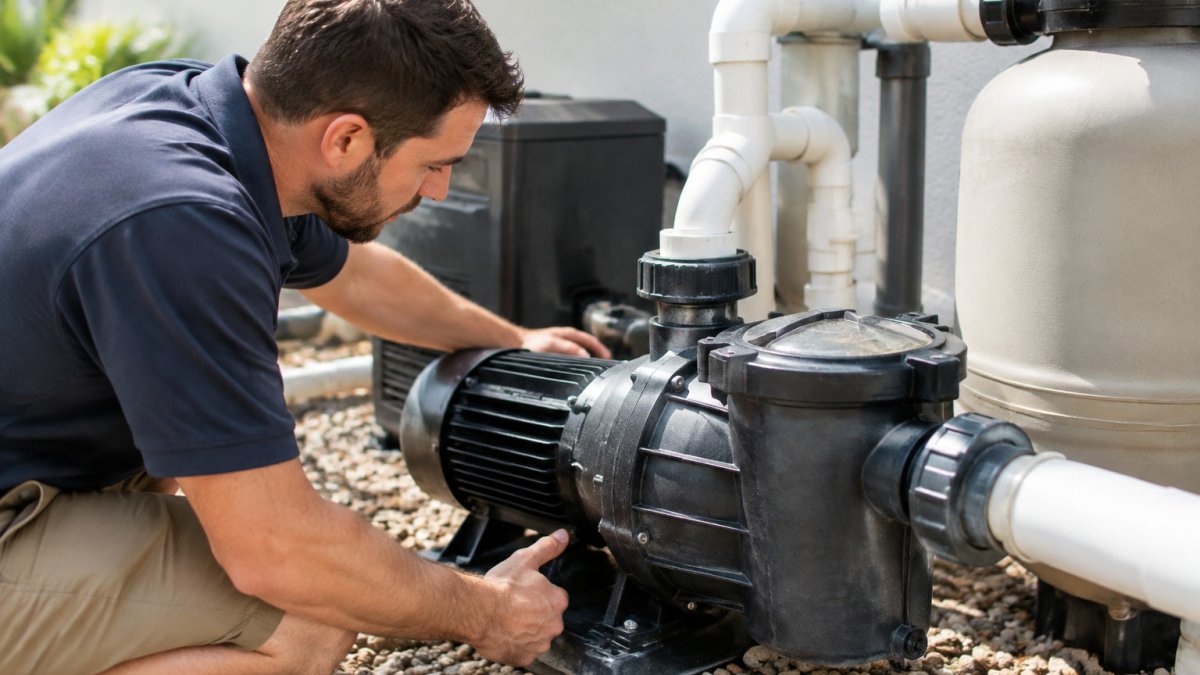
- Equipment condition, since a failing pump can mimic a leak
- Whether the provider charges a service call fee on top of detection
When comparing quotes, ask what each one includes.
How to Check for a Pool Leak Before You Call Anyone
You can rule out evaporation in about 15 minutes with a bucket, and it saves you a service call. Fill a bucket with pool water, mark the level, set it on the first step, and mark the pool level too. Check both after 24 hours. If the bucket drops as much as the pool, you are losing water to evaporation, not a leak.
If the pool drops faster than the bucket, you likely have a leak. Other signs worth noting before you call:
- Wet or soggy spots in the yard near the pool
- Cracks in the decking or pool shell
- Air bubbles in the return lines or pump basket
- A pump that loses prime repeatedly
- Unusually high water bills
Write down what you observe. That detail helps a technician plan the visit and can shorten the diagnostic time. For general guidance on spotting water loss, the U.S. Environmental Protection Agency's WaterSense program covers household leak detection principles that apply to pools too.
Pool Leak Detection Methods and the Pool Leak Detection Test Pros Use
A professional pool leak detection test narrows the search systematically rather than guessing. The technician starts with the most likely culprits: skimmers, return fittings, light niches, and the main drain. Each method below answers a different question.
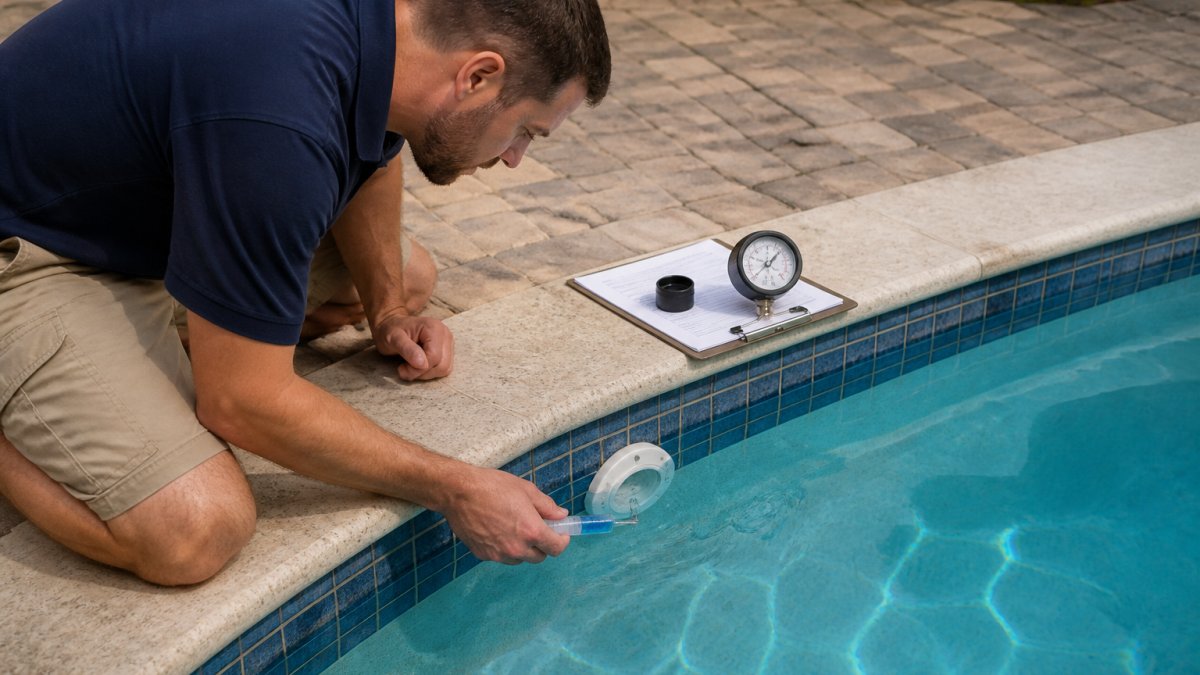
Dye Testing, Pressure Testing, and Electronic Leak Detection
Dye testing is the simplest method. The technician injects a small amount of dye near a suspect fitting or crack with the pump off. If the dye gets pulled into the gap, that spot is leaking. It works well on skimmers, light niches, and shell cracks.
Pressure testing isolates the plumbing. The technician plugs a line and pressurizes it, then watches whether it holds. A line that loses pressure has a pipe leak somewhere along its run. This is how underground plumbing leaks get confirmed without digging.
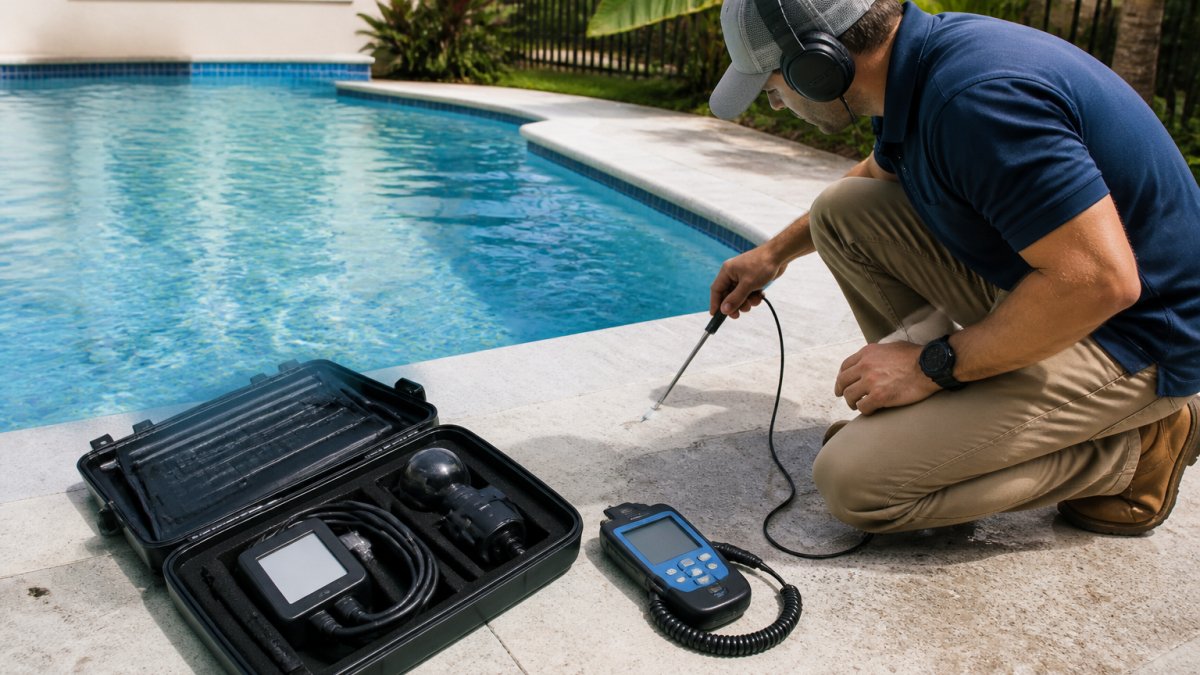
Electronic leak detection uses specialized listening equipment to trace the sound of escaping water or to locate a break in a line. It is the tool that pinpoints a leak location before anyone cuts concrete.
Most visits use two or three of these together. One test confirms a leak exists; the others find where.
Pool Leak Repair Cost: What Happens After the Diagnosis
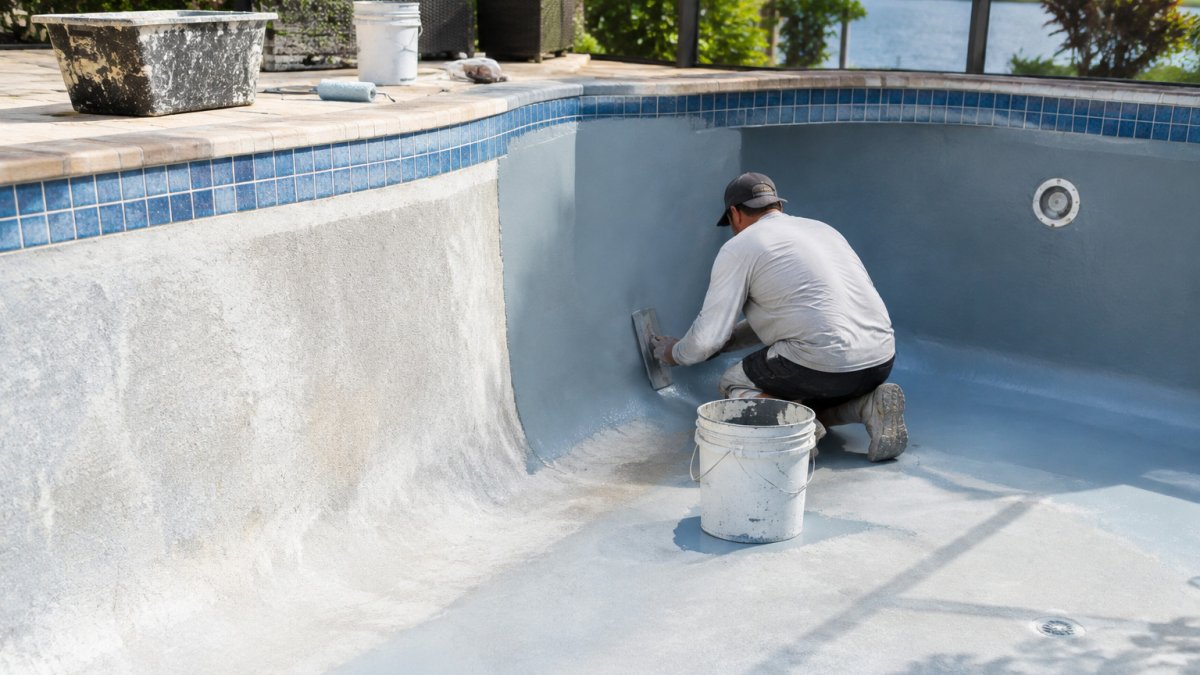
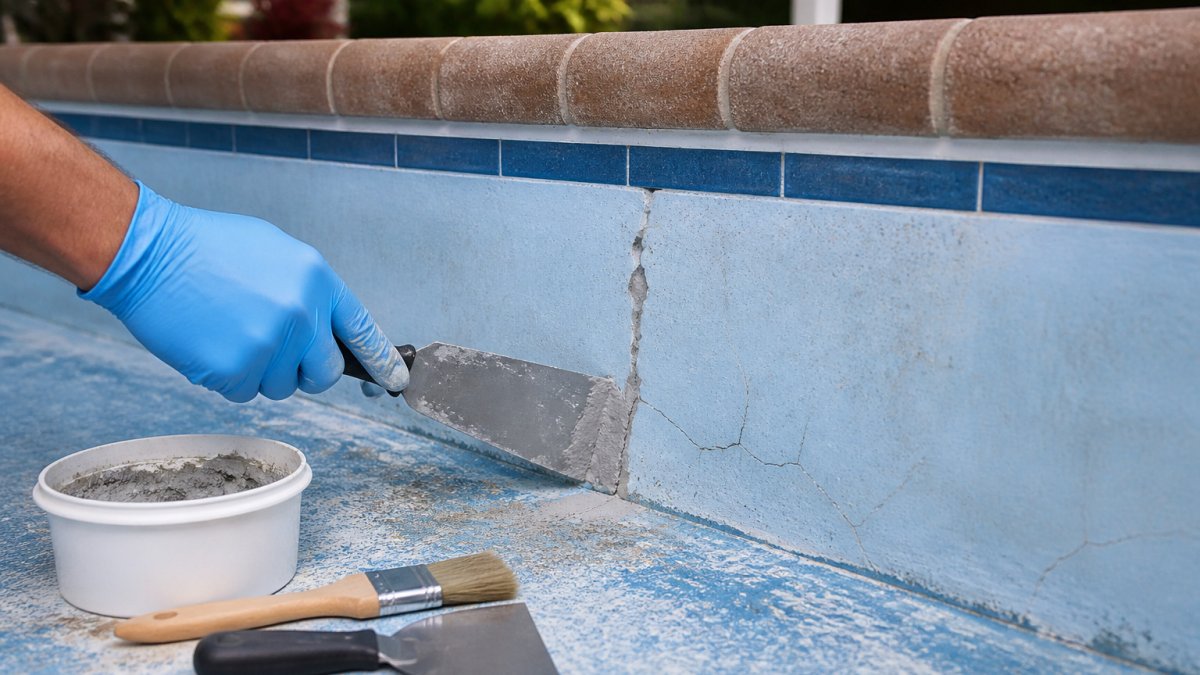
Pool leak repair cost depends on the leak type, and the diagnosis determines the scope. A fitting repair or a skimmer patch is straightforward. A pipe leak under decking means excavation and line repair. A structural crack in the pool shell may need patching, and in serious cases, surface restoration.
Ask any provider how it handles unexpected damage found during a repair, and whether it will provide a written estimate before work starts.
The Consumer Financial Protection Bureau's guidance on home improvement contracts is worth reading before signing any repair agreement, particularly on change orders.
What Happens During an Appointment and How to Compare Local Providers
Most homeowners have never watched a leak inspection, so the visit feels like a black box. Here is the sequence a typical appointment follows, followed by the questions that separate a thorough provider from a lead-generation page with a truck.
Step by Step Through the Visit
- Walkthrough and history. A technician will typically ask when you first noticed the water loss, whether it is steady or intermittent, and what you have already ruled out.
- Visual inspection. Skimmers, return fittings, light niches, the main drain, the pump pad, and the deck are checked for cracks, wet spots, and staining.
- Dye testing. A small amount of dye is injected near suspect fittings with the pump off. Dye pulled into a gap confirms a leak at that point.
- Pressure testing. Individual plumbing lines are plugged and pressurized. A line that will not hold pressure has a break somewhere along its run.
- Electronic tracing. Listening equipment or a line locator pinpoints the break before anyone cuts concrete.
- Findings summary and written estimate. You should leave the visit knowing where the leak is, how it was confirmed, and what the repair involves, in writing.
A written findings summary is a sign of a thorough provider, and a verbal guess is not a diagnosis.
Questions to Ask When Comparing Local Providers
- Is the detection fee flat-rate, and which tests does it include?
- Will I receive a written estimate before any repair work begins?
- What happens if the first round of tests finds nothing, is there a follow-up charge?
- Is the detection fee credited toward the repair?
- What warranty applies to the repair, and does it cover both parts and labor?
- Do you carry liability insurance and, where required, a state or local license?
- Can you handle both detection and repair in-house, or do you subcontract?
- How do you handle change orders if the repair uncovers worse damage?
Reading Reviews for Cost Clarity
When you scan customer reviews, look for mentions of whether the final bill matched the estimate, how clearly the provider explained the diagnosis, and whether follow-up visits were handled without extra charges. Speed and friendliness matter, but cost transparency is the signal that predicts a good experience.
Book a Leak Inspection With PoolRepairs
Losing water and unsure where it is going? PoolRepairs serves homeowners across the Disney-area corridor and communities west of Orlando. Our interactive before-and-after portfolio shows surface restoration work, and financing through a trusted partner is available for larger jobs.
Get started with PoolRepairs to discuss your leak and request a quote.
Frequently Asked Questions
How much does professional pool leak detection cost?
Pricing depends on the size of the pool, how many tests are needed, and whether the leak is in the shell or underground plumbing. Most providers charge a flat-rate service call for the initial inspection, then add pressure testing or electronic detection if the first pass does not locate the leak. Ask for a written estimate before any work begins when you call around.
Does pool leak detection include the repair?
Usually not. Detection and repair are billed separately: the inspection finds the leak location, and the repair is quoted once the technician knows what is involved. A fitting repair or light niche reseal is a smaller job than digging up a return line. Ask each provider whether the detection fee is credited toward the repair if you book it the same visit, and confirm the warranty on the repair itself before you approve the work.
How can I tell a leak from normal evaporation?
Use the bucket test. Fill a bucket with pool water, set it on a step so the water level matches the pool, and mark both levels. After 24 hours, compare them. If the pool drops noticeably more than the bucket, you likely have a leak. Evaporation affects both equally. Repeat the test on a mild day with the pump running normally, and check for other clues like wet spots near the equipment pad or a skimmer that keeps losing prime.
How long does pool leak detection take?
Visit length varies with the inspection scope. Pressure testing the plumbing lines adds time, and electronic leak detection on a large in-ground pool can run longer if the first tests are inconclusive. Ask the provider to estimate the visit length when you book.