 how-to
7 Causes of Pool Pump Grinding Noise and How to Fix Them
Quick Summary
The most common fixes for pool pump grinding noise are clearing a clogged strainer basket, removing impeller debris, and replacing a worn lid O-ring. If the noise persists after those checks, worn motor bearings are the likely cause and should be inspected before the pump runs again.
- Clear the strainer basket and confirm water sits at mid-skimmer before anything else.
- Turn off the breaker, then spin the impeller by hand to check for scraping debris.
- Replace or lubricate the lid O-ring if you see bubbles in the basket while running.
- Grinding that continues after cleaning usually points to worn motor bearings needing service.
- Get an itemized quote separating parts from labor before approving any bearing or motor repair.
Table of Contents
- What a Grinding Pool Pump Is Telling You
- Diagnosing the Source: Step-by-Step Pump Inspection
- Fixing Impeller Debris and Pump Bearing Wear
- Pool Pump Repair vs Replacement Cost: Deciding What to Do
- Preventing Grinding Noise With a Simple Maintenance Schedule
- Booking Your Pump Diagnosis With PoolRepairs
- Frequently Asked Questions
What a Grinding Pool Pump Is Telling You
Last Updated: November 4, 2026
A grinding sound from your pool pump is almost never normal and rarely fixes itself.
Grinding and rattling can sound alike from across the yard but point to different problems. This guide covers the most common causes of pool pump grinding noise and how to address each.
Watch out: Do not run a pump that is grinding hard. Continued operation can destroy the motor shaft and bearings, turning a simple repair into a full replacement.
Sound Library: Grinding vs. Rattling vs. Whining
Each noise points somewhere different. Use this quick guide before you open anything:
- Grinding: A rough, gravelly sound that changes with pump speed. Often points to worn motor bearings or a shaft problem.
- Rattling: Loose, clicking metal or plastic. Usually debris trapped in the impeller housing or a loose component.
- Whining or humming: A high, steady pitch. Commonly tied to a failing capacitor, low voltage, or a bearing that is starting to wear.
If the sound is grinding, assume bearings until you rule them out.
Diagnosing the Source: Step-by-Step Pump Inspection
Before you pay anyone, narrow the problem yourself. Separate three suspects in order of likelihood and cost: starvation/cavitation (cheap), impeller debris (cheap), and motor bearings (expensive).
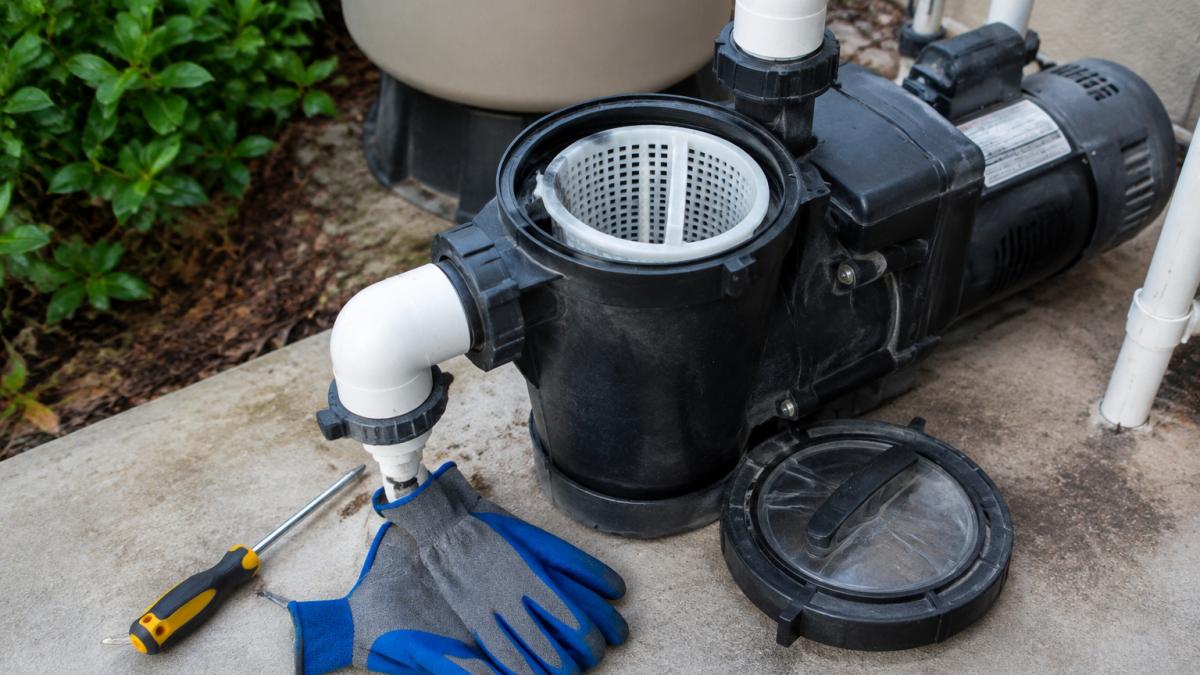
Shut off power at the breaker, not just the timer. Flipping the timer or the pump's on/off switch can leave the circuit live at the motor.
- Check water level and the strainer basket first. Skimmer water should sit at roughly the middle of the skimmer mouth. A basket packed with leaves, hair, or small stones starves the pump, and a starved pump cavitates, a sound many homeowners describe as grinding. Clear the basket and re-test first.
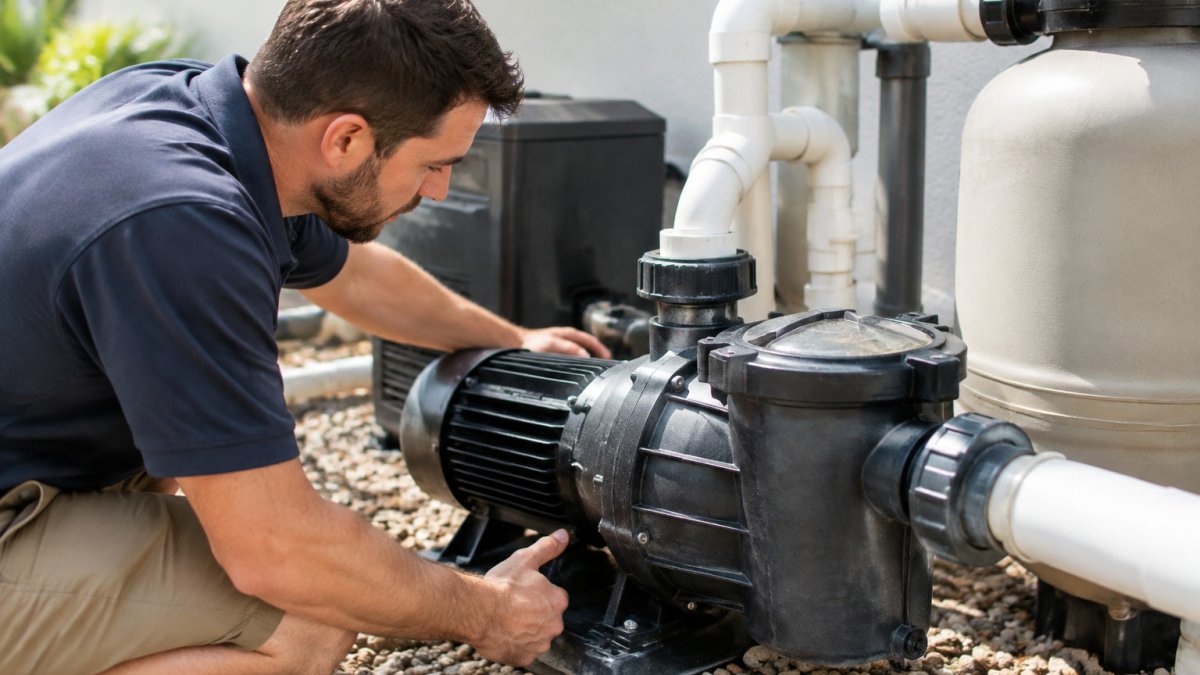
- Open the pump lid and inspect the impeller. With power off, look into the volute. Leaves, grit, and small stones lodge against the impeller vanes and scrape as it turns. Spin the impeller by hand: it should turn freely with no scraping, catching, or side-to-side play.
- Check for air leaks at the lid O-ring and union fittings. A dry, cracked, or crooked O-ring pulls air in and produces cavitation noise. Look for bubbles in the pump basket while running and water weeping at the unions.
- Isolate the noise location. Have a helper start the pump briefly while you listen at the motor end versus the volute end. Noise loudest at the back (fan cover) points to bearings; noise at the front (volute) points to debris or cavitation.
- Test for bearing play. With power off and the pump cool, remove the fan cover and try to rock the fan/shaft by hand. Noticeable radial play or a gritty feel confirms worn bearings.
A common mistake is skipping the basket and water-level check.
Above-Ground vs. In-Ground Pumps
The diagnostic order is the same, but access differs. Above-ground pumps are usually self-priming and sit at or near water level, so a lid O-ring or union leak shows up quickly as air in the basket. In-ground pumps are often fed by a flooded suction line and may sit below water level, so a suction-side air leak is harder to spot, check the pump lid, suction-side union, and valve before the pump.
Tools You Need Before You Open the Pump
Gather these before you start, so you do not stop halfway through:
- Screwdriver set and a flathead for stubborn clamps
- Pair of gloves and a rag
- Replacement lid O-ring and a tub of pool-safe lubricant (silicone-based, not petroleum jelly)
- Bucket for catching water and debris
Having the model number on hand matters. Parts are often model-specific, and a close match can still fail to seal.
Watch out: Do not open the motor housing or attempt to remove the impeller while the pump is connected to power.
The table below summarises the main grinding-noise causes and the first fix to try for each, so you can work through the cheap checks before the expensive ones.
| Cause | Sign | First fix |
|---|---|---|
| Clogged strainer basket | Starved pump cavitates | Clear the basket and re-test |
| Low water level | Skimmer water below mid-mouth | Raise water to mid-skimmer |
| Impeller debris | Scraping when spun by hand | Remove leaves, grit and stones |
| Air leak at lid O-ring | Bubbles in basket while running | Replace or lubricate O-ring |
| Worn motor bearings | Radial play or gritty feel at fan | Motor service or replacement |
Fixing Impeller Debris and Pump Bearing Wear
Impeller debris is the easiest fix on this list. Once cleared, the noise often stops at once.
Bearing wear is harder. If the impeller spins freely by hand but grinding continues while the motor runs, the bearings inside the motor are the likely source.
Watch out: A pump that grinds after you clean the impeller may have a shaft or bearing problem.
Pool Pump Bearing Replacement Cost Factors
Bearing replacement cost depends on the pump's make and model, whether the motor can be serviced or must be replaced, and how much labor the repair takes. Before any work starts, ask for a clear quote after diagnosis so you know the full scope. Ask any provider for an itemized quote that separates parts from labor.
Pool Pump Repair vs Replacement Cost: Deciding What to Do
A repair makes sense when the pump is fairly new, the fault is isolated to a part like the impeller, lid O-ring, seal, or capacitor, and the rest of the motor runs well.
Use a simple rule of thumb: if the repair costs more than half the price of a comparable new pump, weigh replacement seriously. Also factor in energy use, older single-speed pumps draw far more power than newer variable-speed models.
What the Repair Actually Involves
Bearing replacement is a motor service: the motor is removed, end bells pulled, old bearings pressed out, new bearings pressed in, and the motor reassembled and re-sealed. A seal kit is usually replaced at the same time because the mechanical seal is disturbed during disassembly. A motor swap is simpler labor-wise, disconnect, unbolt, and replace, but the motor itself is the largest single part cost.
DIY vs. Professional: Where the Line Is
Most homeowners can safely handle the wet end: the strainer basket, lid O-ring, impeller debris, and pump lid. Those tasks involve no line voltage and no sealed motor components.
Bearing replacement and motor swaps cross a line for most people. The work involves 240V wiring, capacitor discharge, pressing bearings to a precise fit, and re-sealing the motor so it stays watertight.
Getting a Real Number
Repair or replacement cost varies widely with the pump and problem, so ask for an itemized quote that separates parts from labor and states whether the motor is being serviced or replaced.
Watch out: A quote that does not separate parts from labor makes it hard to tell whether you are paying for a bearing service or a full motor swap.
Preventing Grinding Noise With a Simple Maintenance Schedule
Most grinding noise comes from neglect. A little routine care prevents most of it:
- Weekly: Empty the strainer basket and check the water level in the skimmer.
- Monthly: Inspect the lid O-ring and look for cracks in the housing.
- Every 3 months: Lubricate the lid O-ring and check for air leaks at the seal.
- Yearly: Have a technician check the motor, capacitor, and bearings.
Keeping the basket clean alone prevents a surprising share of pump problems and protects the seal and motor from strain.
Booking Your Pump Diagnosis With PoolRepairs
If grinding continues after your own checks, a professional diagnosis is the safest next step. PoolRepairs focuses on clear communication: we explain what is wrong, what the repair involves, and what it will cost before we begin. We serve Central Florida. Contact PoolRepairs for a diagnosis and quote, and we will walk you through the options so you can decide with confidence.
Frequently Asked Questions
Why is my pool pump making a grinding noise?
A grinding noise usually comes from one of three places: worn motor bearings inside the pump motor, debris or a cracked impeller rubbing against the pump housing, or a failing mechanical seal allowing parts to contact each other. Turn the pump off and check the basket for debris first, since a clogged basket can strain the motor. If the noise continues after the basket is clear and the impeller spins freely by hand, the bearings or seal are the likely cause and the pump needs a closer inspection.
Is it safe to run a pool pump that is making a grinding noise?
Running a pump with a grinding noise is not recommended. Worn bearings can seize the motor, which can trip the thermal overload, damage the windings and leave you without circulation or filtration. Continued operation can also turn a small impeller or seal problem into a full pump replacement. Shut the pump off, confirm the basket and strainer are clear, and schedule a diagnosis before restarting it for regular use.
How do I know if my pool pump bearings are bad?
With the power off and the pump disconnected, spin the motor shaft by hand. Bearings in good condition turn smoothly and quietly; rough spots, catching or a gritty feel point to wear. Grinding that rises and falls with motor speed, or that gets louder over days or weeks, also suggests bearings. Bearing wear is confirmed by opening the motor, which is best left to a technician if you are not comfortable with electrical components.
Can a pool pump impeller cause a grinding noise?
Yes. Small stones, sand, hair or broken plastic can lodge between the impeller and the pump housing or volute, causing a grinding or scraping sound. A cracked impeller can produce a similar noise along with reduced flow. Inspecting the impeller means removing the pump lid or volute cover and checking for debris and wear. Clearing debris often solves the noise, but a damaged impeller usually needs replacement.